

Introduction
University dropout is a serious problem for both students and institutions. When a student leaves university before completing their course, the consequences go beyond individual frustration: they represent lost opportunities, wasted resources, and an impact on the university’s reputation.
Many of these situations do not happen suddenly. There are early signs that a student is facing difficulties, but identifying them in time and acting effectively remains a challenge.
This case study demonstrates how Artificial Intelligence (AI) can transform this data into actionable insights, enabling universities to predict the risk of dropout and intervene at the right moment, supporting students in a personalized and effective way.

The Challenge
Universities collect a lot of information about students during their academic journey. However, this data is not often used to predict future risks of dropout.
The main difficulties were:
- Understanding which students may need help earlier.
- Detecting risk in a large number of students.
- Acting before the student decides to leave.
- Avoiding generic support actions that are not effective.
Without a clear way to identify risk, support teams often react too late.
The Solution
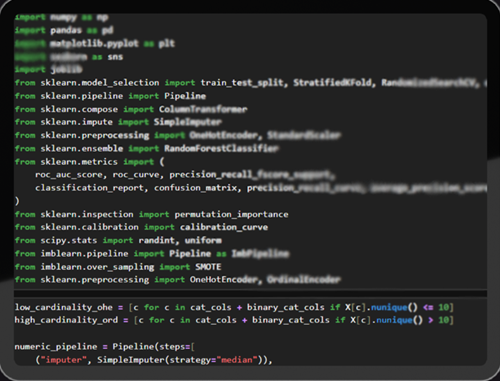
To address this problem, we developed an AI based solution that analyzes existing student data and estimates the risk of dropout for each student.
Instead of focusing on technical details, the solution works in a simple way:
- It looks at patterns from past students.
- It learns which situations often lead to dropout.
- It assigns a risk level to current students.
This allows academic and social support teams to focus their attention where it matters most.
How it Works In Simple Terms
The system analyzes information that universities already have, such as:
- Academic progress.
- Enrollment history.
- Attendance and engagement indicators.
- Demographic data.
- Grades.
Based on this information, the system identifies students with a higher probability of dropping out. These students can then be contacted and supported through customized actions.
Results
The solution showed very strong results when tested with real data.
- The system was able to correctly identify most students who later dropped out.
- It maintained high reliability when identifying students who would continue their studies.
- The predictions were stable and consistent.
Most importantly, the model provides early warnings, not final decisions. This gives institutions time to act.
Impact and Added Value
This solution creates clear benefits for universities:
- Early intervention, so students receive help before problems become irreversible.
- Personalized support, since actions can be adapted to each student’s situation.
- Better use of resources, so support teams focus on students who truly need attention.
- Improved retention rates, since more students can complete their degrees.
From the student’s perspective, they will feel supported instead of abandoned.
Responsible Use of AI
This solution was designed to support people and help people, not replace them under any circumstances.
- Decisions are always made by academic staff.
- The system only provides risk indicators in form of percentage.
- The goal is prevention.
Ethics and transparency were considered from the start of this project.
Conclusion
Artificial Intelligence offers a real opportunity to improve academic success and student retention. This case study demonstrates that, with the right data and strategic human intervention, it is possible to identify early risks and implement support measures tailored to individual needs.
By acting at the right time, universities not only reduce dropout rates and improve academic outcomes but also foster a more inclusive and supportive learning environment.
Does your institution/organization want to turn data into action and support students/clients before it’s too late? AI could be the key to more informed decisions and more effective interventions.